
Islamic Minimalism: Decluttering the Soul and Home
In a world defined by constant noise, endless notifications, and the pressure to accumulate more, many Muslims are seeking a lifestyle that brings clarity, peace, and purpose. This is where Islamic Minimalism (2) emerges as a refreshing reminder that our faith naturally encourages simplicity, moderation, and mindful living. Far from being a modern trend, this approach aligns deeply with prophetic teachings that highlight balance and intentionality.
At its core, Islamic Minimalism (3) is not about living with almost nothing. Instead, it is about creating space for what truly matters—your relationship with Allah, your inner peace, and the meaningful parts of everyday life. When you focus on essentials and let go of excess, you begin to experience a lifestyle that feels lighter, clearer, and spiritually richer.
🌙 What Islamic Minimalism Really Means (4)
Many people associate minimalism with empty rooms or stark furniture, but the Islamic approach is far more holistic. Islamic Minimalism (5) emphasizes removing the physical and emotional clutter that distracts you from your purpose. This includes unnecessary possessions, draining relationships, overcommitment, and digital overload.
It is a process anchored in tazkiyah—the purification of the heart. Islam teaches moderation and warns against extravagance. Allah says:
“Do not be excessive. Indeed, He does not like those who commit excess.” (Qur’an 7:31)
This verse perfectly aligns with the essence of Islamic Minimalism (6), which calls us to live intentionally and avoid wastefulness in all areas of life.
🌿 The Spiritual Benefits of Living Simply
When you declutter your surroundings and your heart, you naturally move closer to Allah. Minimal living supports a Muslim’s spiritual journey in powerful ways.
1. A Clearer Heart and Mind
A home overflowing with unused belongings often mirrors an overwhelmed mind. Practicing Islamic Minimalism (7) helps create mental spaciousness by reducing distractions. When your environment is peaceful, worship becomes easier and more focused.
2. More Time for Worship
Less cleaning, less organizing, and fewer unnecessary tasks leave more time for Qur’an, Salah, and reflection. Simplicity opens doors for deeper spiritual growth.
3. Greater Gratitude
Owning fewer things makes you appreciate what you have. Gratitude increases contentment—one of the main emotional goals of Islamic Minimalism (8).
🏡 Decluttering the Home With Purpose
A peaceful home creates a peaceful heart. Practicing Islamic Minimalism (9) at home means being intentional with what you allow into your space.
1. Start With Your Intention
Your intention should always be to please Allah—by avoiding waste, simplifying your life, and making your home a place of worship and tranquility.
2. Sort Through What You Own
Look around your home and ask yourself:
-
Does this item help my family?
-
Does it add value or create distraction?
-
Would someone else benefit from it more?
Letting go becomes an act of charity, which is a key part of Islamic Minimalism (10).
3. Create Areas for Worship
A simple, uncluttered prayer space encourages consistent devotion. Even a small corner with a prayer mat, Qur’an, and soft lighting can transform your spiritual routine.
🧘 Decluttering the Soul
Minimalism that only focuses on physical items is incomplete. Islamic Minimalism (11) also includes emotional and spiritual cleansing.
1. Release Negative Emotions
Holding onto anger, envy, or resentment creates internal clutter. Islam teaches us to forgive, practice patience, and seek goodness in others. Letting go of emotional burdens brings peace.
2. Simplify Digital Life
Digital clutter is one of today’s greatest sources of stress. Reduce your screen time, unfollow accounts that drain your energy, and remove apps that distract you from your purpose. Practicing Islamic Minimalism (12) online supports healthier habits and a clearer mind.
3. Prioritize What Truly Matters
Simplify your commitments. Not everything deserves your time. Focus on obligations, family, worship, and personal well-being.
🌼 The Prophet’s Example of Simple Living
The Prophet Muhammad ﷺ lived with purpose and moderation. His home was simple, his possessions few, and his heart rich. He said:
“Riches are not many possessions. True richness is the richness of the soul.”
This saying reflects the heart of Islamic Minimalism (13). The goal isn’t to empty your home—it’s to fill your life with meaning, gratitude, and spiritual wellness.
🌟 Practical Ways to Begin Islamic Minimalism Today
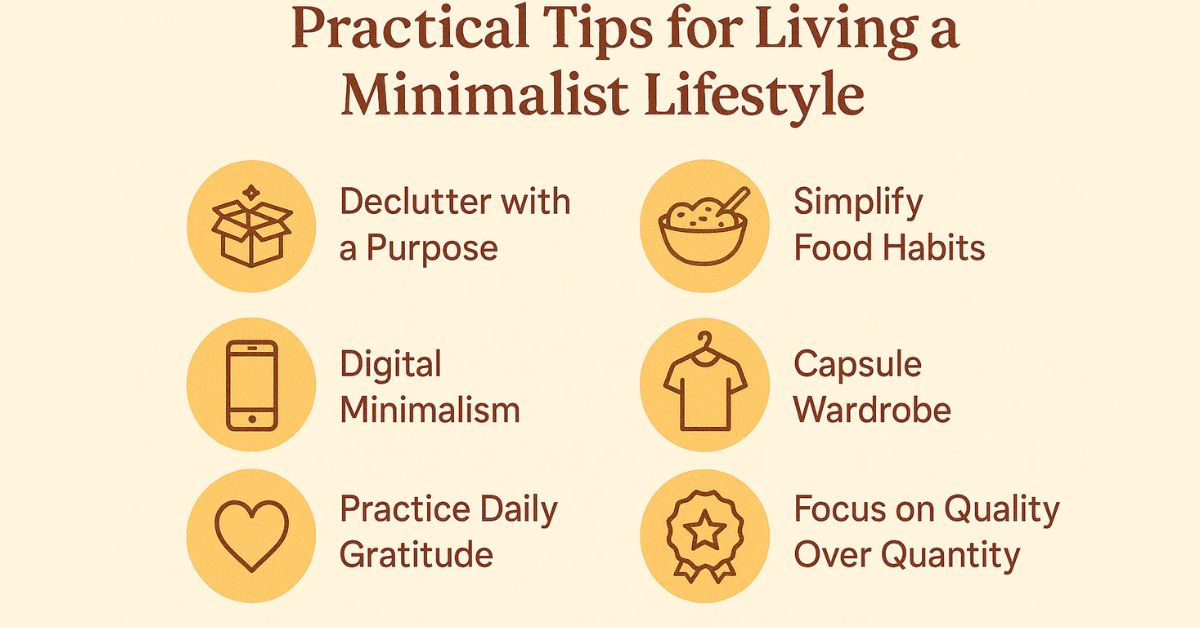
If you’re ready to embrace Islamic Minimalism (14) but don’t know where to begin, start small. Simple steps create big change over time.
✔ Declutter one small space at a time
A drawer, a shelf, or a single closet. Small wins build momentum.
✔ Adopt the “one in, one out” rule
For every new item you bring in, remove one. This prevents future clutter.
✔ Consume mindfully
Pause before purchasing. Ask yourself if you truly need the item.
✔ Seek quality over quantity
Islam encourages moderation—not deprivation.
✔ Donate regularly
Giving away items is both cleansing and rewarding.
✔ Reevaluate often
Every few months, reflect on your belongings and habits.
🌙 Why Islamic Minimalism Matters Today
Modern life pushes us to want more, do more, and own more. But this chase often leads to stress, financial strain, and emotional emptiness. Islamic Minimalism (15) offers a balanced alternative rooted in faith, contentment, and clarity.
By letting go of what weighs you down, you create space for:
-
Peace
-
Purpose
-
Gratitude
-
Spiritual connection
-
Healthier relationships
You begin to experience a life that feels intentional rather than overwhelming.
🌙 Final Thoughts
Living simply is not about deprivation. It is about choosing what aligns with your values, your faith, and your well-being. Islamic Minimalism guides you to create a calm home, a clear mind, and a heart focused on Allah. When you let go of excess—whether physical clutter or emotional baggage—you make room for peace, clarity, and spiritual strength.
Start small. Be gentle with yourself. And remember: simplicity is a journey, not a destination.
More blogs Halal Travel Tips Every Muslim Should Know Before Exploring the World -2025