
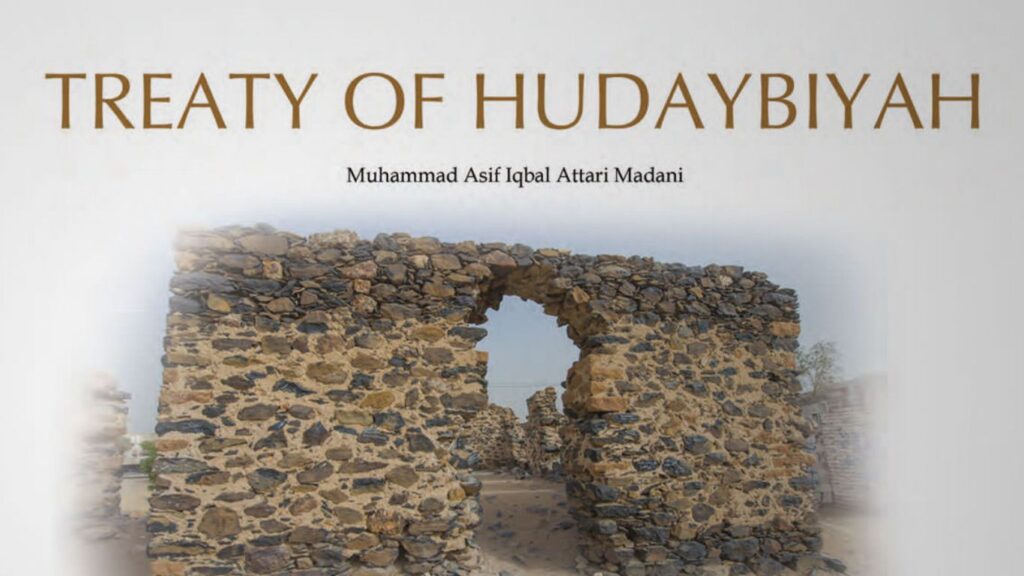
The Wisdom of the Treaty of Hudaybiyyah: A Turning Point in Islamic History
In the life of Prophet Muhammad, there were many defining moments that shaped the future of Islam. Among them, The Treaty of Hudaybiyyah stands out as one of the most powerful examples of patience, strategic thinking, and unwavering trust in Allah. At first glance, it appeared to be a setback for the Muslims. Yet in reality, it became one of the greatest victories in Islamic history.
Table of Contents
ToggleUnderstanding The Treaty of Hudaybiyyah helps us see how wisdom sometimes lies beneath what seems disappointing. It teaches Muslims how to respond to conflict, how to negotiate with dignity, and how to trust divine wisdom even when circumstances feel unfavorable.
The Background of The Treaty of Hudaybiyyah
Six years after the migration (Hijrah) to Medina, the Prophet ﷺ had a dream that he and his companions were performing Umrah in Mecca. Dreams of the Prophet ﷺ were revelation, so he set out with approximately 1,400 companions, dressed in ihram, carrying no weapons except those allowed for travelers. Their intention was clear: they were coming for pilgrimage, not war.
However, the Quraysh of Mecca saw this as a threat. They prevented the Muslims from entering the city and stopped them at a place called Hudaybiyyah, located just outside Mecca.
This tension led to negotiations that would ultimately result in The Treaty of Hudaybiyyah — a peace agreement between the Muslims and the Quraysh.
The Terms That Seemed Unfair
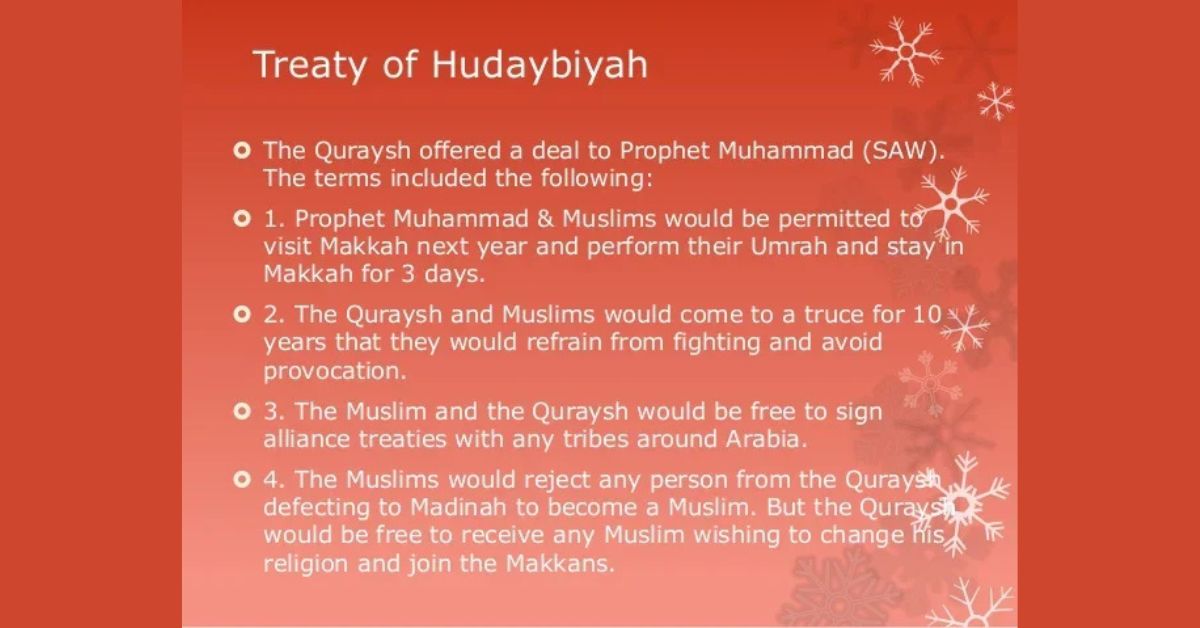
When the negotiations began, representatives from both sides met to draft the agreement. One of the key negotiators for Quraysh was Suhayl ibn Amr. The terms of The Treaty of Hudaybiyyah included:
-
A ten-year peace treaty between the Muslims and Quraysh.
-
The Muslims would return to Medina that year without performing Umrah.
-
They would be allowed to return the following year for three days to complete Umrah.
-
Any Meccan who fled to Medina without guardian permission would be returned.
-
Any Muslim who defected to Quraysh would not be returned.
To many companions, these terms felt humiliating. Even great companions like Umar ibn al-Khattab struggled to understand why they were agreeing to what seemed like one-sided conditions.
Yet the Prophet ﷺ accepted the terms.
Why?
Because he saw beyond the moment.
Why The Treaty of Hudaybiyyah Was a Victory
Shortly after The Treaty of Hudaybiyyah was signed, Allah revealed in the Qur’an:
“Indeed, We have given you a clear victory.” (Surah Al-Fath 48:1)
How could this be called a victory?
1. Peace Created Opportunity
Before The Treaty of Hudaybiyyah, Muslims were in constant conflict with Quraysh. The peace agreement created stability. For the first time, Islam could spread without the immediate threat of war.
During the two years following The Treaty of Hudaybiyyah, more people embraced Islam than in all the years prior. Leaders who had once been enemies — such as Khalid ibn al-Walid — accepted Islam during this period of peace.
Peace opened doors that war never could.
2. Strategic Patience Over Emotional Reaction
Many companions wanted to fight. They felt strong and ready. But the Prophet ﷺ demonstrated restraint.
The Treaty of Hudaybiyyah teaches us that strength is not always shown through confrontation. Sometimes, true strength lies in self-control, long-term vision, and wisdom.
In today’s world, we often react emotionally to injustice or conflict. But this event shows that responding calmly and strategically can produce far greater outcomes.
3. Legitimizing the Muslim Community
By signing The Treaty of Hudaybiyyah, Quraysh indirectly acknowledged the Muslims as a legitimate political entity. This was huge.
Previously, Quraysh treated Muslims as rebels. Now, they were negotiating as equals.
This recognition strengthened the position of the Muslim community across Arabia. Other tribes began forming alliances with the Muslims, knowing they were now officially recognized.
4. A Test of Trust in Allah
When the Prophet ﷺ told the companions to shave their heads and sacrifice their animals (even though they had not performed Umrah), many were devastated. They struggled emotionally.
It was only when the Prophet ﷺ led by example that they followed.
The Treaty of Hudaybiyyah became a test of faith. It separated those who trusted Allah’s plan from those who judged by immediate appearances.
Often in life, we face situations that feel unfair or confusing. This story reminds us that Allah’s wisdom operates beyond our limited perspective.
5. The Agreement Was Ultimately Broken — By Quraysh
Two years after The Treaty of Hudaybiyyah, Quraysh violated the peace agreement by attacking a tribe allied with the Muslims.
This breach gave the Muslims legitimate grounds to march toward Mecca. What followed was the peaceful conquest of Mecca — a monumental event in Islamic history.
If The Treaty of Hudaybiyyah had not been signed, this victory may not have unfolded in the same way.
What seemed like compromise led to triumph.
Lessons for Modern Muslims
The relevance of The Treaty of Hudaybiyyah goes far beyond history. Its lessons apply directly to our personal lives, families, communities, and even global relations.
1. Not Every Compromise Is Weakness
Sometimes we think standing firm means refusing to bend. But this event shows that strategic compromise can lead to greater success.
In marriage, business, and community leadership, wisdom often means looking at long-term impact rather than short-term pride.
2. Emotional Intelligence Is Sunnah
The Prophet ﷺ managed a highly emotional group of companions with calm leadership. He listened, reassured, and acted decisively.
Modern leadership — whether in a masjid, workplace, or home — requires that same emotional intelligence demonstrated during The Treaty of Hudaybiyyah.
3. Trusting Divine Timing
The companions wanted immediate fulfillment of their dream to perform Umrah. Instead, they had to wait.
But one year later, they entered Mecca peacefully.
Sometimes Allah delays something not to deny it, but to grant it in a better way.
A Deeper Reflection on Victory
Victory in Islam is not always measured by visible dominance. It is measured by alignment with Allah’s will.
The Qur’an calling The Treaty of Hudaybiyyah a “clear victory” teaches us to redefine success. Victory can look like patience. It can look like negotiation. It can look like walking away.
And sometimes, it looks like returning home without what you hoped for — only to receive something greater later.
The Psychological Strength Behind The Treaty of Hudaybiyyah
One of the most remarkable aspects of The Treaty of Hudaybiyyah was the Prophet’s unwavering composure.
He was insulted during negotiations. His title “Messenger of Allah” was erased from the written document at Quraysh’s insistence. Yet he agreed.
He understood that titles on paper did not define his mission. Allah’s support did.
This teaches us an essential mindset: do not let ego block greater opportunities.
How The Treaty of Hudaybiyyah Changed History
Within two years of The Treaty of Hudaybiyyah, the Muslim population dramatically increased. Islam expanded across Arabia at an unprecedented rate.
The peaceful conquest of Mecca followed — without mass bloodshed, without revenge, without forced conversion.
This transformation from persecution to leadership was not achieved through constant battle, but through strategic peace.
History proves that what appeared as a concession was actually a masterstroke of leadership.
Applying These Lessons Today
If you are facing:
-
A difficult negotiation
-
A family dispute
-
Workplace conflict
-
Community disagreement
-
A delayed dream
Reflect on The Treaty of Hudaybiyyah.
Ask yourself:
-
Am I reacting emotionally or strategically?
-
Am I prioritizing ego or long-term benefit?
-
Do I trust Allah’s plan even when I don’t understand it?
Sometimes the greatest breakthroughs begin with patience.
Final Thoughts
The story of The Treaty of Hudaybiyyah is not just an event from 7th-century Arabia. It is a blueprint for leadership, emotional strength, strategic planning, and unshakeable faith.
What looked like defeat became a doorway to expansion.
What felt humiliating became empowering.
What seemed like loss became victory.
In a world that glorifies immediate wins and aggressive responses, this event teaches us something deeper: wisdom, restraint, and trust in Allah often lead to outcomes beyond imagination.
May we learn to see our challenges through the lens of The Treaty of Hudaybiyyah — recognizing that sometimes the clearest victory comes disguised as compromise.
More blogs Scientific Miracles in the Quran -2025